Three Thai Women Freed from Human Egg Trafficking in Georgia
March 5, 2025
Early this year, a chilling report of human egg trafficking shocked the world. It exposes a complex operation that aims to exploit vulnerable Thai women and lure them to Georgia. The victims were promised lucrative surrogacy jobs; however, they were instead tricked by these recruiters and have them lead into a human egg facility. They’re imprisoned in this facility and forced to use their bodies as commodities and sell their harvested eggs without their consent. These harvested eggs would be later on sold in the black market.
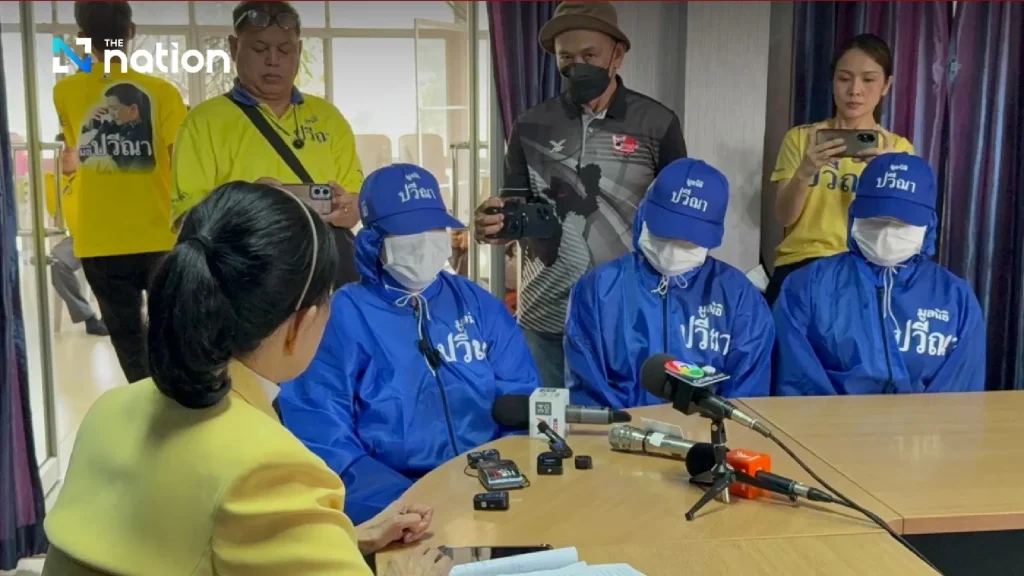
Photo from The Nation Thailand
This on-going case uncovers the harrowing details of an egg trafficking ring in Georgia but also raises urgent questions about the global fertility industry’s dark side. Here’s everything you need to know about this unfolding tragedy and what the authorities are doing to prevent this illegal operation.
The Incident: From Hope to Horror
Seeking financial stability, a woman from Thailand answered a social media advertisement regarding surrogacy in Georgia. The agreement stipulated a monthly stipend of approximately 25,000 Thai Baht, which is roughly equivalent to $700 USD, and the woman was then transported via Dubai and Armenia to Georgia, where she was received by two people of Chinese nationality. They were escorted by these Chinese men only to arrive in Georgia and have their passports seized.
Photo from The Nation Thailand
Instead, she and 10 other Thai women found themselves trapped in an elaborate egg trafficking operation. Upon arrival in Georgia, their documents were confiscated, and they were confined to overcrowded houses under constant surveillance.
One survivor, her voice trembling, shared, “We were like animals in a cage, our bodies used without consent.” This wasn’t surrogacy—it was egg farm human trafficking, orchestrated by a ruthless trafficking network.
Based on a news report, one survivor managed to secure her release for 70,000 Baht but reported that at least three Thai women remained trapped. She alerted the Pavena Hongsakul Foundation, which, in collaboration with international police and Thailand Human Trafficking Prevention authorities, launched a raid on January 30, 2025, targeting a compound of four houses in Georgia.
The operation successfully rescued the three women, but the foundation estimates that over 100 women may still be held captive in this egg trafficking ring in Georgia. Efforts are ongoing to locate and liberate these individuals, as Thai authorities continue to strengthen Thailand Human Trafficking Prevention measures to combat such transnational crimes.
Thai authorities and Interpol are on the hunt, but the trail is tangled. They believe harvested eggs are fueling fertility clinics beyond Thailand, revealing a skilled criminal operation.
Thailand and Georgia: A Trafficking Hotspot
Why Thailand and Georgia? The answer lies in a toxic mix of legal gaps and economic desperation. Thailand banned commercial surrogacy in 2015 after scandals revealed widespread exploitation, driving such operations to countries like Georgia, where regulations are lax. Georgia’s permissive surrogacy laws and low-cost fertility services attract both legitimate clients and criminals, creating a haven for human egg trafficking.
For traffickers, it’s a goldmine. In Thailand, economic hardship leaves women vulnerable to false promises of high wages abroad. Despite a low 1.03% female unemployment rate in 2023 (according to TheGlobalEconomy.com), many Thai women seek higher-paying jobs abroad, driven by the country’s gender wage gap and modest average wages, making them vulnerable to recruitment scams. This clash of circumstances fuels vulnerable women trafficking, turning Georgia into a hub for exploitation disguised as opportunity.
This isn’t a one-off tragedy—it’s part of a chilling trend of exploitation in the fertility industry. In 2019, Cambodia busted a surrogacy ring exploiting women for Chinese clients. In 2018, Thailand jailed an Australian for illegal surrogacy operations. These cases spotlight a grim truth: as demand for fertility services skyrockets, so does the risk of abuse. The egg trafficking ring in Georgia is just the latest chapter in a story that demands global attention and reform.
Why This Still Matters Today
Weeks after the first reports, this case remains urgent. With up to 100 women potentially still trapped, the crisis is far from resolved. Beyond the immediate horror, it exposes gaping holes in the fertility industry and international law enforcement. How can such exploitation thrive unchecked? This isn’t just a Thai or Georgian issue—it’s a global wake-up call.
Women’s bodies have become commodities, bought and sold. The dark side of the reproductive industry exploits the vulnerable circumstances of these women. While authorities, such as the Thai government, are making efforts to combat human trafficking, this complex issue requires the cooperation of multiple parties. These profit-driven schemes result in the victimization of countless people.
What’s Next?
The rescue of three Thai women from this egg trafficking in Georgia nightmare is a start, but it’s not enough. With dozens possibly still captive, the world can’t look away. Governments must tighten fertility industry regulations, protect victims, and dismantle trafficking networks through international cooperation.
You can help, too. Support groups like the Pavena Foundation to bring awareness and push for policy changes, and keep this story alive. The egg trafficking ring operating in Georgia is a clear example of modern slavery. Human egg trafficking is a crisis we must confront together. Let’s take action now to end this exploitation and ensure no woman’s body becomes a commodity. Despite ongoing efforts to rescue the estimated 100 women still trapped, the situation remains unresolved, and there have been no new developments reported in the past few days.
The internet is full of noise. We’re here to make sense of the chaos online. We bring you sharp takes on the stories, communities, and trends that actually matter.